Captain Ron shore sheet
Quick verdict
For a yacht on passage, Messina is mostly about the Strait: 3.1 km wide between Torre Faro and Villa San Giovanni, with strong tidal streams, ferries every few minutes and a traffic scheme in the middle (Wikipedia). The north shore west of Capo Peloro is a useful staging anchorage when the wind is offshore. Marina del Nettuno in Messina harbour is the berth when you actually want to see the city.
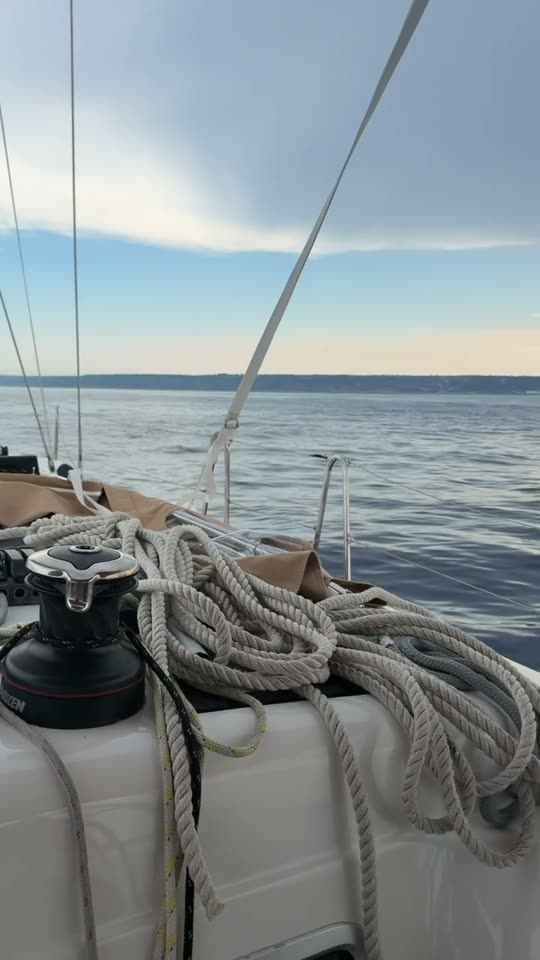
We anchored on sand off Mortelle, west of Capo Peloro, in an offshore southerly that left the water flat. We found no specific anchoring ban there, but check the latest ordinances and stay well west of the Torre Faro cable area.
Inside Messina harbour: 160 berths up to 40 m, with berthing help around the clock. Call a few miles out; a limited number of transit berths can be booked online (Nettuno).
Pleasure craft under 45 m do not have to take part, but listen on 10 and keep 16 open. Watch the ferries and cross the lanes at right angles.
Getting through the Strait
- Time it with the stream, not the clock. The tidal current runs north and south for several hours at a time and can reach about 4–5 knots at springs off Punta Pezzo. Plan the transit to have the stream with you and the wind not against it. The official reference is the Navy Hydrographic Institute's Le correnti di marea nello Stretto di Messina, and the online calculator at strettoindispensabile.eu uses its data.
- We weighed anchor before dawn and went through at slack water turning fair. In the narrows that made it an easy, uneventful run south past the city.
- Messina VTS (callsign "MESSINA VTS") works VHF 10, with 13 and 14 for reporting and 16 for distress. Inshore traffic zones are kept for local traffic, including pleasure craft. Inside the traffic scheme's "roundabout" vessels go anticlockwise, and from 1 June to 30 September there is a 16-knot limit from sunrise to sunset (VTS user manual).
- Ferries and fast craft between Messina, Villa San Giovanni and Reggio cross constantly. Make your intentions obvious early.
- Mountain gusts come off the Peloritani and the Calabrian side in a strong southerly. Check the forecast for gusts at the cape, not just the mean wind.
Where you cannot anchor
- Torre Faro: Navily marks it anchoring forbidden, because of the cables that cross the Strait here. We found no single official ordinance online, so read the chart and keep well clear (Navily).
- Capo Rasocolmo: the VTS manual bans anchoring between the 10 m contour and a 1.7 NM radius around the Capo Rasocolmo lighthouse. That rules out what looks on the chart like the obvious alternative to Mortelle.
- The Capo Peloro lakes (Ganzirri and Faro): a nature reserve. Coast Guard Ordinanza 18/2026 bans motors, anchoring and mooring in both lakes and their canals (ordinance).
- Cable works: Ordinances 143 and 148/2026 close an area between Paradiso / Annunziata and Bolano in Calabria while ordnance is cleared for new power cables. Check the current notices before anchoring anywhere in the Strait.
- Coast Guard: Capitaneria di Porto di Messina, VHF 16. Sea emergency 1530.
A short history
Messina began as Zancle, "the sickle", named for the curved spit that still shapes the harbour. It was founded in the 8th century BC and renamed Messene in the early 5th century BC, when Anaxilas of Rhegium settled refugees from Messenia there (Wikipedia). Homer put Scylla and Charybdis here: the rock on the Calabrian side at Scilla, and a real whirlpool in the northern Strait.
Most of what you see is 20th-century. At 05:20 on 28 December 1908, a magnitude 7.1 earthquake and tsunami destroyed at least 91% of the city's buildings and killed about 75,000 people in Messina and some 120,000 across the Strait. It is the deadliest earthquake in European history (Wikipedia). The landmark you sail past at Torre Faro is the 232 m pylon from 1955. With its twin in Calabria it carried power across the Strait on a 3,646 m span until 1994 (Wikipedia).
Best things to do
- The Duomo's astronomical clock: built in 1933 by Ungerer of Strasbourg. Be in Piazza Duomo at noon, when the lion roars, the rooster crows and the figures parade (Wikipedia). The Fontana di Orione is in the same square.
- MuMe, the regional museum: the city's art collection, including Antonello da Messina. Check what is on display first: several Antonello panels were stolen in August 2026, and not all have been recovered (Sky TG24).
- Ganzirri and the Capo Peloro lagoon: two salt lakes behind the cape, still farmed for mussels and clams on wooden poles, with seafood restaurants along the shore. Walk or taxi; the lakes are closed to boats.
- Torre Faro and the pylon: the northern tip of Sicily, with the Calabrian coast close enough to read the signs. Best at sunset.
- Santuario di Montalto: the church above the city, rebuilt after 1908, with a view straight down the Strait.
Food and drink
The local dishes are focaccia messinese (escarole, anchovies, tuma cheese), pitoni (fried half-moon pastries), swordfish from the Strait, Ganzirri mussels, and pignolata for dessert (Gambero Rosso).
- Bellavista, Via Circuito 126, Torre Faro: modern seafood on a terrace looking across the Strait. Listed by Gambero Rosso.
- La Cambusa Ai 2 Laghi, Via Lago Grande 29, Ganzirri: lake and sea fish by the lagoon.
- Panta Rei, Torre Faro, by the lake: seafood pasta courses.
- Casa & Putia, Via San Camillo 14, city centre: creative local trattoria.
- Cannata (Via Garibaldi 110) and Panificio Laganà (Via Garibaldi 298): the places for pitoni, focaccia and arancini.
- Pasticceria Irrera 1910, Piazza Cairoli: the classic pastry shop for pignolata and cannoli. Messina is also a granita-and-brioche town; we have not verified who makes the best one.
Nearby excursions
- Reggio Calabria by fast ferry: the Riace bronzes at the Museo Nazionale della Magna Grecia (Wikipedia; Liberty Lines Strait services).
- The Aeolian Islands by hydrofoil: Liberty Lines runs Messina to Vulcano, Lipari and Salina via Reggio on its autumn timetable.
- Taormina by train, under an hour south. See our Taormina guide; it was the next stop after this one.
- Monte Dinnammare (1,130 m) in the Peloritani: on a clear day you can see both seas, the Aeolians and Etna (Wikipedia).
Chandlers and boat bits
- Mediterranea Forniture: marine and yacht supplies, hardware and paints, near the port. The business is verified from its own site; call to confirm the address and stock before walking over.
- Nautica Femminò: boat dealer and authorised Mercury, Yamaha and Volvo Penta workshop, for engine trouble rather than shackles.
- Riviera Mare on Viale della Libertà is a fishing and diving shop, not a chandlery. It is useful for snorkels, not for spares.
Crew missions
Captain Ron bottom line
The Strait of Messina is not hard, but it is strict. Anchor on the north shore with the wind offshore, set the alarm by the tide table, and go through with the stream behind you before the ferries and the afternoon gusts get going. Keep off the cables, the cape and the lakes. Then go back by train for the noon clock and a plate of pitoni.