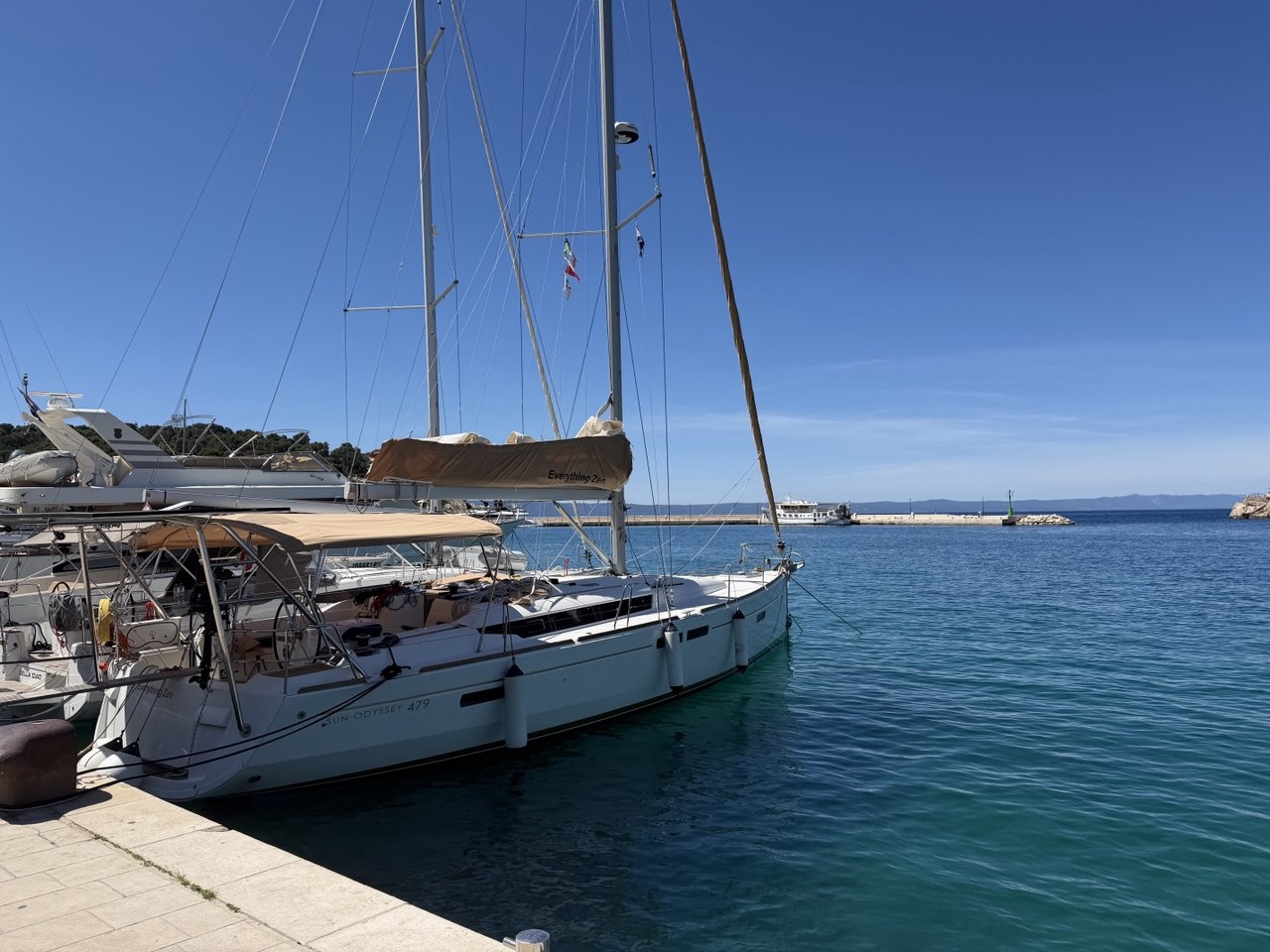
Captain Ron shore sheet
Quick verdict
Porto Grande is the best value stop on Sicily's east coast and it is not close. It is an enormous natural harbour, the entrance is wide and obvious, the holding is honest mud, there is no anchoring fee, and the dinghy ride to Ortigia is about four minutes with the outboard barely awake. You get a UNESCO old town, a working fish market, an archaeological park with a Greek theatre in it, and a fuel dock you can reach with jerry cans. We came in from Catania, dropped the hook among roughly twenty other boats, and stayed three nights because nobody could think of a single reason to leave.
The catch is exposure. Porto Grande opens to the south-east, and when the scirocco or an easterly gets ideas, swell wraps in and the whole anchorage turns into a slow-motion washing machine. It is not dangerous. It is just the sort of night where the crockery has opinions and someone ends up sleeping in the cockpit.
Marina notes: read first
Anchoring is allowed in the bay, no formal fee. Cruising sources put depths at roughly 7-20 m across the rada, with most boats sitting in about 8-10 m over mud and sand. We anchored in Porto Grande.
Floating pontoons at Molo Zanagora inside Porto Grande, right by the canal that splits Ortigia from the mainland. The marina's own site lists VHF channel 69, a 24/7 operational base, and up to 7 m draught.
There is a fuel berth beside the marina at Molo Zanagora, close to the dinghy steps. We did ours the unglamorous way: dinghy, cans, and about fifty litres poured back into the tanks by hand.
The approach to Siracusa: past Capo Murro di Porco
Coming down the coast, the last real feature is Capo Murro di Porco, the blunt southern nose of the Maddalena peninsula. Round it and Porto Grande opens up to the west like someone pulled a curtain. It is one of the least stressful arrivals in Sicily: no dog-leg, no narrow cut, no marina bloke waving a boathook at you before you have finished your coffee.
- Mind the marine park. The water around Capo Murro di Porco and the Maddalena peninsula is the Area Marina Protetta del Plemmirio, a zoned reserve with restrictions on anchoring, diving and fishing depending on which zone you are in. The park runs an authorisations page. Do not treat those pretty little coves on the way in as a free lunch stop without checking the zone.
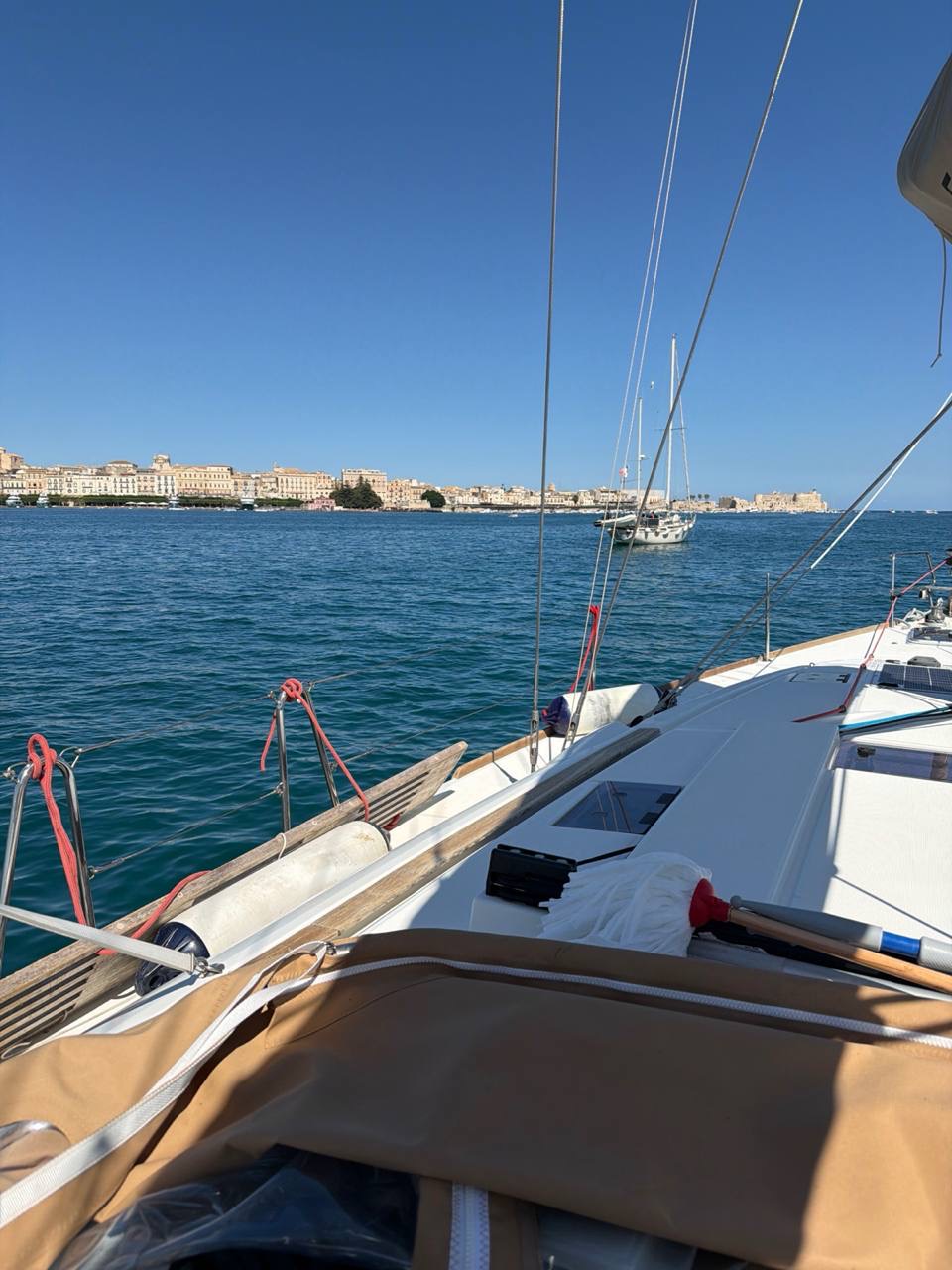
- Use Castello Maniace as your handrail. The old fortress on the southern tip of Ortigia is the obvious landmark on the northern side of the entrance and it is visible a long way out. Line it up, come in on a gentle heading, and the whole bay unfolds.
- Expect traffic, not chaos. Ferries, tour boats, trawlers and the odd cruise ship all use Porto Grande, and there is a working port on the western side. There is acres of room to manoeuvre; just keep your head up and stay out of the marked lanes.
- Watch for Secca Galera if you are cutting across the south-eastern part of the bay. It is a shoal patch, it is charted, and it has no interest in your keel's feelings.
- Coming from the north, this is an easy day. Ours was about seven hours from Catania at five to six knots with the engine doing most of the persuading, arriving mid-afternoon in flat water.
Anchoring in Porto Grande: where to drop and where not to
The anchorage is huge and, at least in early July, nowhere near full. We shared it with roughly twenty boats and everyone had room to swing without negotiating. The general rule is simple: anchor in the wide western and north-western part of the bay off the Ortigia frontage, and leave the eastern and southern edges near the commercial quays and breakwaters alone.
- Pick your depth. Reported depths across the bay run roughly 7-20 m; most of the fleet sits in about 8-10 m. Plenty of chain, then, and no excuse for short scope.
- Do not creep towards the harbour. This is the single most repeated warning in cruiser reports: boats anchored too close to the commercial side get moved on by the pilot boat, sometimes at seven in the morning, sometimes with a horn. Not a fine, just an indignity. Sit with the fleet.
- The north-west corner is the polite corner. It is where the pilot pushes people, it is deeper into the bay, and it is the better place to be if easterly swell is running.
- Set it properly and back down hard. The bottom is mud and sand, and it holds well once the anchor is buried, but soft mud rewards patience and punishes the drop-and-hope method. Give it scope, give it revs, and give it a minute before you open anything cold.
- Anchor watch is not optional in a blow. Everything Zen sat there for three nights of genuinely light weather — dawn breezes of about 3 knots and seas around 0.16 m — so the hook never had a hard day. Do not read our easy week as a guarantee of yours.
- There is no anchoring fee, but cruisers report an orange rubbish boat doing the rounds collecting a bin fee — figures quoted are around €15 a day for boats up to 24 m. Have a few notes aboard and be pleasant about it.
Holding, mud and weed: what actually comes up
Porto Grande's seabed is soft mud with sand in patches, and the consensus from cruisers who have sat there in real weather is that the holding is dependable. That said, soft mud is soft mud. It takes a moment to bite, it comes up on the chain in dark ribbons, and if you are the sort of skipper who likes a spotless foredeck you will want the wash-down pump ready before the windlass starts. Weed is not the headline complaint here that it is in some Sicilian bays, but the standard Med drill applies: look at what you are dropping onto, do not set on top of a grass patch if you can put it on clean bottom, and reverse until you are convinced rather than until you are bored.
One quirk worth knowing: the Anapo river empties into the harbour, so after rain the water turns cloudy with sediment and eyeballing the bottom stops working. Our week was dry and the water was so clear it looked photoshopped, but do not count on that.
The swell rule: southerlies, scirocco and rolly nights
This is the one thing to actually plan around. Porto Grande's entrance faces roughly south-east, and that is exactly where the trouble comes from. Cruisers describe an easterly swell that wraps around the entrance and works its way into the bay, and one report of a two-day scirocco putting a steady roll through the anchorage even without much wind behind it. You get slop, not danger. But slop for two nights makes a crew very unreasonable about breakfast.
- If scirocco or a sustained SE is forecast, move deeper into the bay towards the north-western edge, or stop pretending and take a berth.
- A stern line to the chain to hold the bow into the swell rather than the wind is the classic fix if the two disagree. Cheap, ugly, works.
- Watch the shoulder days. Our own forecast for the following Saturday had southerly gusts creeping towards 23-24 knots, which is precisely the sort of number that turns a lovely anchorage into a bad memory.
- Summer nights ashore are loud. Several cruisers mention music from the Ortigia waterfront running from about 23:00 to 02:00 in season. Not a safety issue. Definitely a sleep issue.
Berthing at Ortigia: the marina options
If the swell rule sends you looking for lines, there are two obvious answers, both right in the old town.
- Marina Yachting Siracusa, Molo Zanagora. Floating pontoons inside Porto Grande beside the canal that separates Ortigia from the rest of the city. The marina's own site gives VHF channel 69, a 24/7 operational base, maximum draught 7 m, and a position of 37°03'42.0"N 15°17'25.3"E. It also runs a self check-in system, so you can do the paperwork from the boat rather than queueing in a hot office. This is the one that puts you inside the historic centre.
- Yacht Club Lakkios, Porto Piccolo (Porto Marmoreo). Cruiser reports on Noonsite describe a small pontoon in the shallow inner harbour on the canal, berths stern or bows-to with laid lines, mooring assistance by RIB, and roughly 3 m in the centre channel and on the berths. It is tiny and it fills in high season; the same reports mention waiting a night at anchor in Porto Grande until a berth freed up. Reported shelter is fair, with some surge in north-easterlies.
- Town quay. Cruisers have berthed on the town quay and cleared in at the port authority office. Siracusa is an Italian port of entry, so this is the place to do formalities if you need them. Verify current arrangements with the Capitaneria rather than with a website.
Neither of these is a bargain, and neither of them is necessary in settled weather. The anchorage is the value play. The berths are the insurance policy.
Dinghy landing at Ortigia
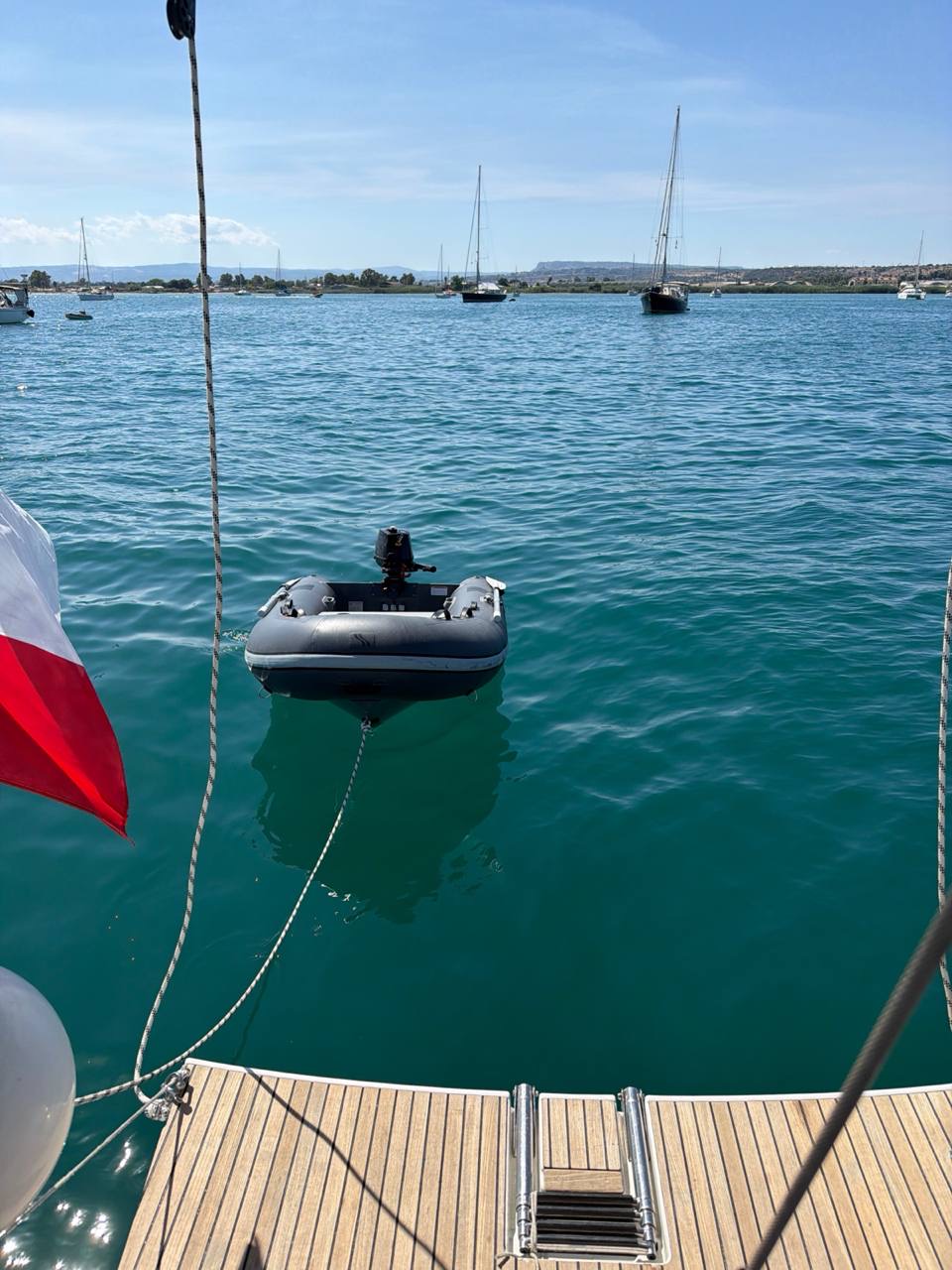
This is the bit that makes the anchorage work. The standard landing is the set of stone steps on the Ortigia waterfront near the corner by Via Mazzini, just behind the marina and close to the fuel dock at the base of the old town. There is room to tie a tender and you step off straight into the historic centre. Cruisers also report being allowed to leave a tender inside the marina itself, which is the tidier option if you are ashore for a long evening.
- Take a long painter and a decent lock. It is a city, and cities have people in them.
- The walk from the steps into Piazza Duomo is a few minutes uphill through the lanes. The walk to the Neapolis archaeological park is about half an hour, or a very short taxi if the crew has already done its steps for the day.
- Fuel is right there, which is how we topped up: cans in the tender, across to the dock, back to the boat, about fifty litres in the tanks and no fuss.
- Provisioning is easy on foot — bakeries, small supermarkets and produce stalls all through the old town, with larger supermarkets on the mainland side if you need a proper shop.
What the town is actually for
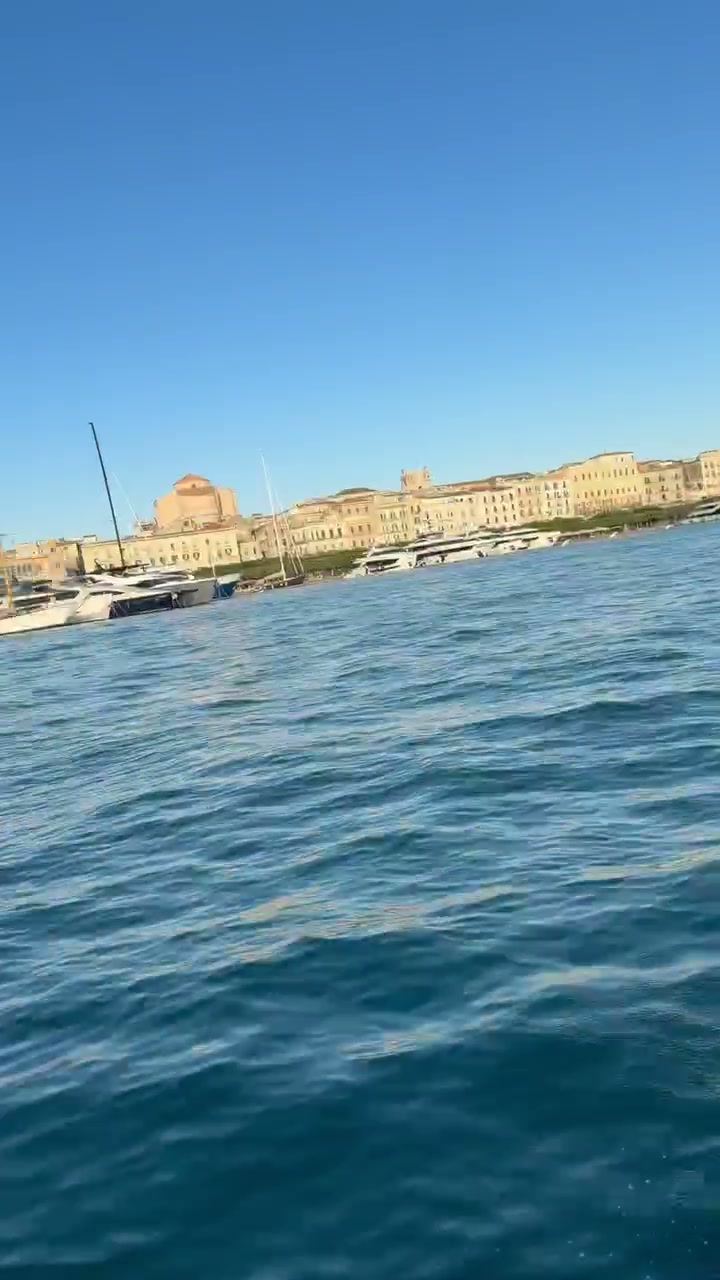
Ortigia is a small island of dense honey-coloured stone joined to the mainland by a couple of bridges, and it is one of the great walking towns of the Mediterranean. It is compact enough that you cannot really get lost and old enough that every third doorway is older than most countries. Siracusa and the rocky necropolis of Pantalica are on the UNESCO World Heritage list, and for once the sticker is deserved.
- Piazza Duomo. The cathedral is built straight into a fifth-century BC Greek temple of Athena — the original Doric columns are still standing in the walls, inside and out. Go once in daylight to see the stonework and once after dark when the whole square is lit and every restaurant has put its tables out.
- Fonte Aretusa. A freshwater spring bubbling up a few metres from the sea, full of papyrus, with a myth attached about a nymph and a river god that Virgil thought was worth writing down. It is small, it is odd, and it takes four minutes.
- The Ortigia market. The morning market in the lanes just inside the bridge, at the northern end of the island, is the real thing: fish on ice, tomatoes that smell like tomatoes, cheese, olives, capers, and men shouting prices at each other with genuine feeling. Go early, go hungry, and bring a bag. This is where the boat's fridge earns its keep.
- Castello Maniace. The thirteenth-century fortress on the tip of the island — also your approach landmark, so it is nice to stand on the thing you steered at.
- The Neapolis archaeological park. Up on the mainland side: the Greek theatre, the Roman amphitheatre, the Altar of Hieron, the Latomia quarries, and the Ear of Dionysius, a cave with acoustics that make grown adults sing badly in public. Check hours and tickets on the regional archaeological parks site before you go; it is a couple of hours minimum and there is very little shade.
- Granita and arancini. Non-negotiable. Granita with a brioche for breakfast — almond, lemon, or coffee if you have things to do — and arancini whenever the crew starts getting philosophical about lunch. Add an espresso at a bar counter and you have basically completed Sicily.
Leaving southbound: the Portopalo corner warning
Read this bit if you are heading down towards Malta or round to the south coast, because it is where our easy week stopped being easy.
We slipped out of Porto Grande on the morning of 8 July 2026 and turned south. The forecast was a shrug: light breeze, small sea, gusts maybe into the low teens by afternoon. It stayed that way for about twenty miles. Then, closing the corner at Portopalo di Capo Passero, roughly eight and a half knots on the beam became about twenty knots on the nose with big, short seas to go with it. Nothing broke. But the plan changed from Malta that day to anchor and regroup, and we ended up hooked in north of Capo Passero with sixty metres of chain out and a beer that had genuinely been earned.
- The corner does not read the forecast. The south-eastern tip of Sicily accelerates and bends the wind, and the sea state there can be a whole category worse than the grid says. Treat the model as a suggestion for the last ten miles.
- Reef early, slow down, stop slamming. The comfortable answer to a head sea is fewer knots and less sail, not more throttle and more pride.
- Give the headlands room. There are shallows and reefs off Capo Passero and Punta Portopalo on the approach from the north-east, and around Isola delle Correnti to the south-west. Cruising guidance is to keep at least half a mile clear of all of them.
- Have the bolt-hole in your pocket. Portopalo bay itself gives shelter from everything except the south-west; in southerlies or westerlies the anchorage just north of Capo Passero, inside the island, is the better hole and holds well in sand. That is where we ended up, and it did the job.
- Then go to Malta properly. It is about sixty miles from that corner down to the Maltese islands, and it is a far nicer passage started at 05:00 with a rested crew than tacked onto the end of a day that already punched you. We left at dawn the next morning and were tied up in Marsamxett by mid-afternoon.
Boat jobs and other realities
- Fuel by dinghy works. Cans across to the Molo Zanagora fuel dock, back to the boat, roughly fifty litres in. No berth fee, no manoeuvring, no drama.
- Etna gets a vote. On 7 July, with Etna erupting up the coast, Everything Zen woke up wearing volcanic ash. Ash is abrasive: rinse first with plenty of fresh water, never dry-brush it, wash gently top-down, and then check blocks, tracks, drains and filters before you sail on it.
- Water quality ashore. Cruiser reports flag Siracusa's tap water as high in salt because of saline intrusion into the water table. Fine for washing the boat; think twice before filling drinking tanks.
- You will have company. Porto Grande is a superyacht stop as well as a cruising stop — there was a large one anchored a few hundred metres off us all week. Costs nothing to look. Costs a lot to join in.
Crew missions
Captain Ron bottom line
Siracusa is the stop where the boat costs nothing and the town gives everything. Come round Capo Murro di Porco, aim at the castle, drop the hook in the fleet off Ortigia in eight to ten metres of good mud, back it down like you mean it, and then spend a week eating granita and pretending to look at columns. Keep clear of the commercial side, keep an eye on the scirocco, and keep the dinghy locked.
And when you finally leave southbound, respect the Portopalo corner. Eight knots on the beam turning into twenty on the nose is not bad luck, it is geography doing exactly what geography does. Reef the optimism early; the beer keeps.